A driveway gets dirty slowly, so most people do not notice until a neighbor has theirs cleaned and the difference is obvious. The short answer for most homes in Riverside County and Orange County is about once a year. The longer answer is that it depends on what your concrete deals with every day. A shaded walkway next to a sprinkler head needs attention far sooner than a sunny driveway that only sees one car.
This guide covers how often to clean driveways, patios and walkways, what speeds up the buildup, how to tell when it is time, and why this job goes wrong so often as a weekend project.
A sensible schedule for most homes
Think of these as starting points, not rules.
- Driveways: about once a year. Every six months if vehicles leak oil, if you park several cars on it or if the concrete is light colored and shows everything.
- Patios and pool decks: once or twice a year. These are living spaces, and food, drinks, sunscreen, planters and furniture all leave marks. Cleaning before the season you use the patio most makes sense.
- Walkways and entry paths: about once a year, sooner when they sit in shade or get wet from irrigation. Walkways are also where slippery growth matters most, because people actually walk there.
- Commercial entries, sidewalks and drive lanes: more often than a home. Gum, drink spills and steady foot traffic build up quickly, and the entry is the first thing a customer sees.
Southern California does not get enough rain to rinse flatwork clean. For much of the year, whatever lands on your concrete stays there and bakes in the sun. That is why a regular schedule works better here than waiting for the weather to help.
What makes concrete get dirty faster
Oil and automotive fluids
Concrete is porous. Oil, transmission fluid and coolant do not sit on top for long. They soak in, and the longer they sit, the deeper they go. A fresh drip treated within days usually cleans up well. A stain that has been driven over and baked for a few summers may only lighten. If a vehicle in your household leaks, plan on more frequent cleaning and treat new spots early.
Tire marks
Hot tires leave dark marks where cars turn or stop in the same place every day. The marks come from compounds in the rubber that transfer onto the surface, and they are worse on sealed or very smooth concrete. They build up gradually in the same arcs, which is why they are easy to overlook.
Irrigation overspray
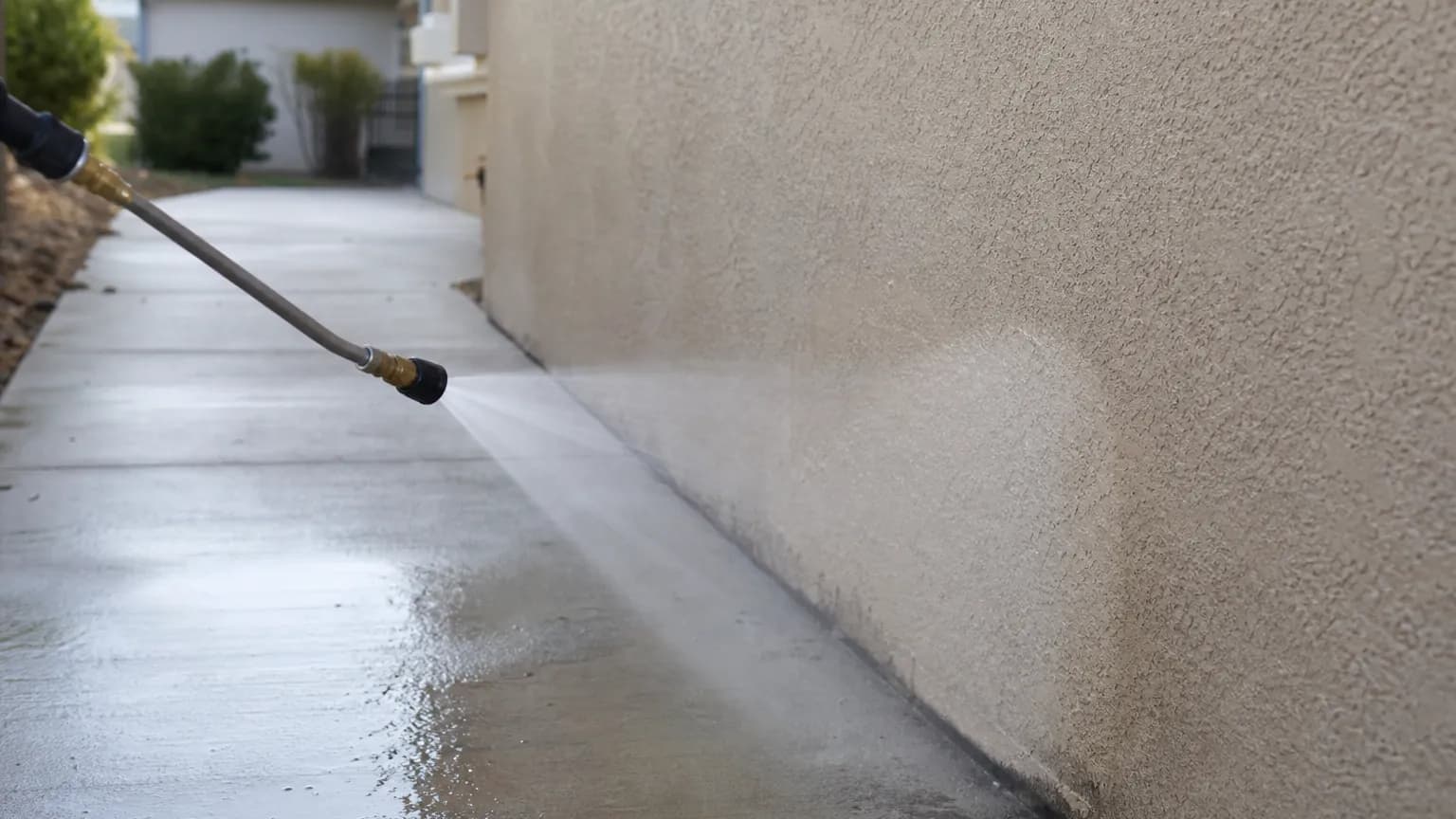
Sprinklers that hit the driveway or walkway every morning do two things. The water here carries a lot of minerals, so it leaves a white or rusty crust along the edge of the concrete. It also keeps that strip damp, and damp concrete grows algae. Overspray is one of the most common reasons a walkway looks bad long before the rest of the property does. The same sprinklers are often behind hard water spots on windows, so it is worth adjusting the heads.
Shade and algae
North-facing walkways, side yards, and areas under trees or eaves stay cool and damp. That is where green and black growth shows up first. Besides the look, it gets slick when wet. Shaded areas often need cleaning twice as often as the sunny part of the same property, and they benefit from a cleaning solution that kills the growth instead of only blasting the surface layer off.
Dust and wind
Dry seasons and wind events leave a fine layer of dust on everything. On its own, dust sweeps or rinses away. Mixed with morning moisture, sprinkler water or oil residue, it turns into a film that bonds to the surface and dulls the color of the concrete.
Signs it is time
You do not need a calendar to tell. Look for these:
- The concrete is visibly darker in the areas where cars park or people walk than it is along the edges.
- Green, black or rust-colored patches appear in shaded or wet spots.
- A walkway or patio feels slick when wet.
- Water no longer darkens the surface evenly when you hose it, because a film is sitting on top.
- Oil spots are starting to spread or multiply.
- Dirt and leaf stains stay behind after sweeping and hosing.
- You are getting ready to sell, host an event, or seal the concrete or pavers.
If you check two or three of these, it is time.
Why DIY pressure washing goes wrong
Renting or buying a pressure washer looks simple, and for rinsing patio furniture it is. Flatwork is where the problems show up.
Etching
The smooth top layer of a concrete slab is thinner and softer than most people expect. A narrow tip held a few inches away will cut into it. The result is rough lines, exposed sand and aggregate, and marks that do not go away when the concrete dries. Etched concrete also holds dirt more easily, so it gets dirty faster from then on. This damage is permanent.
Striping
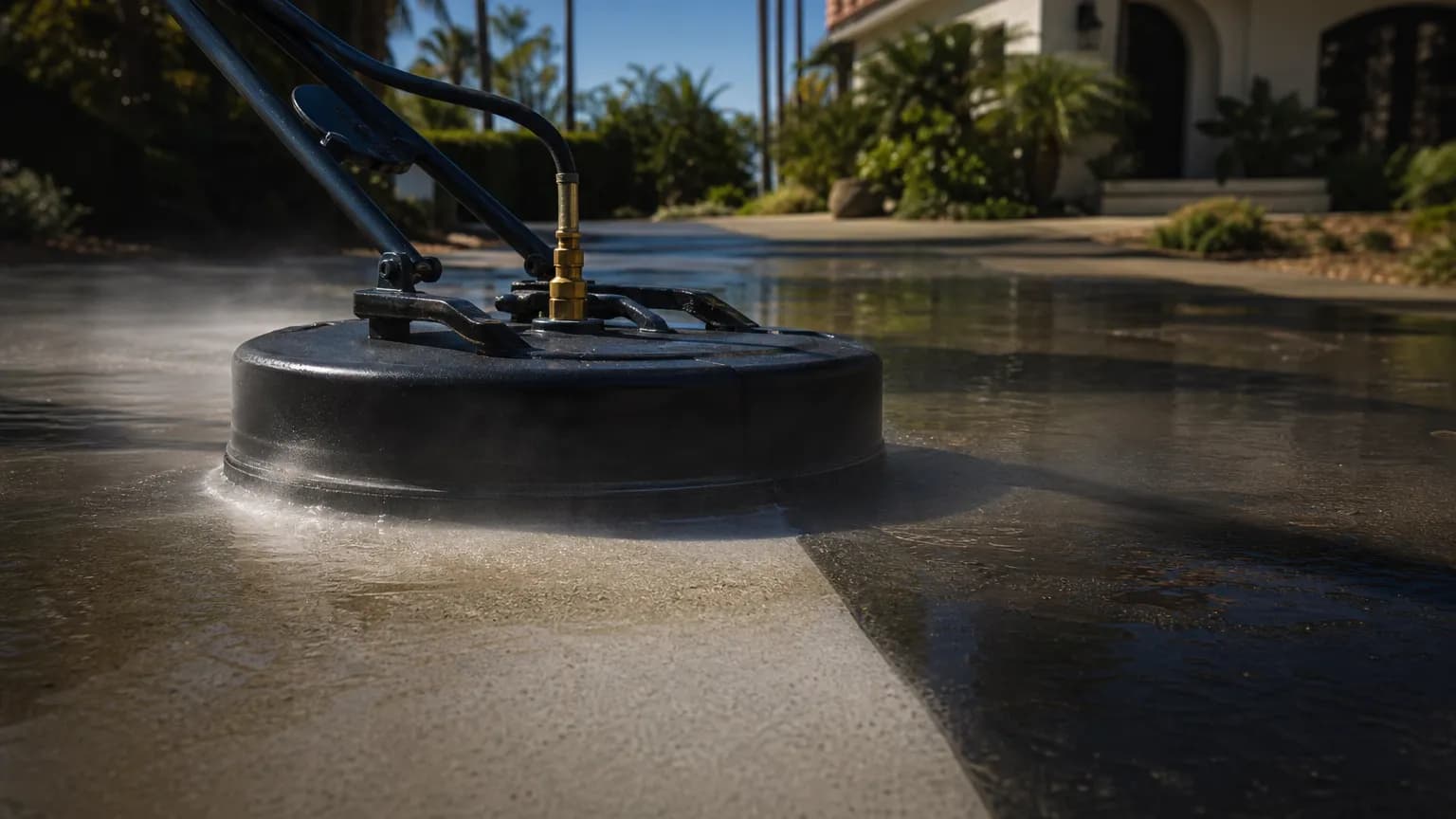
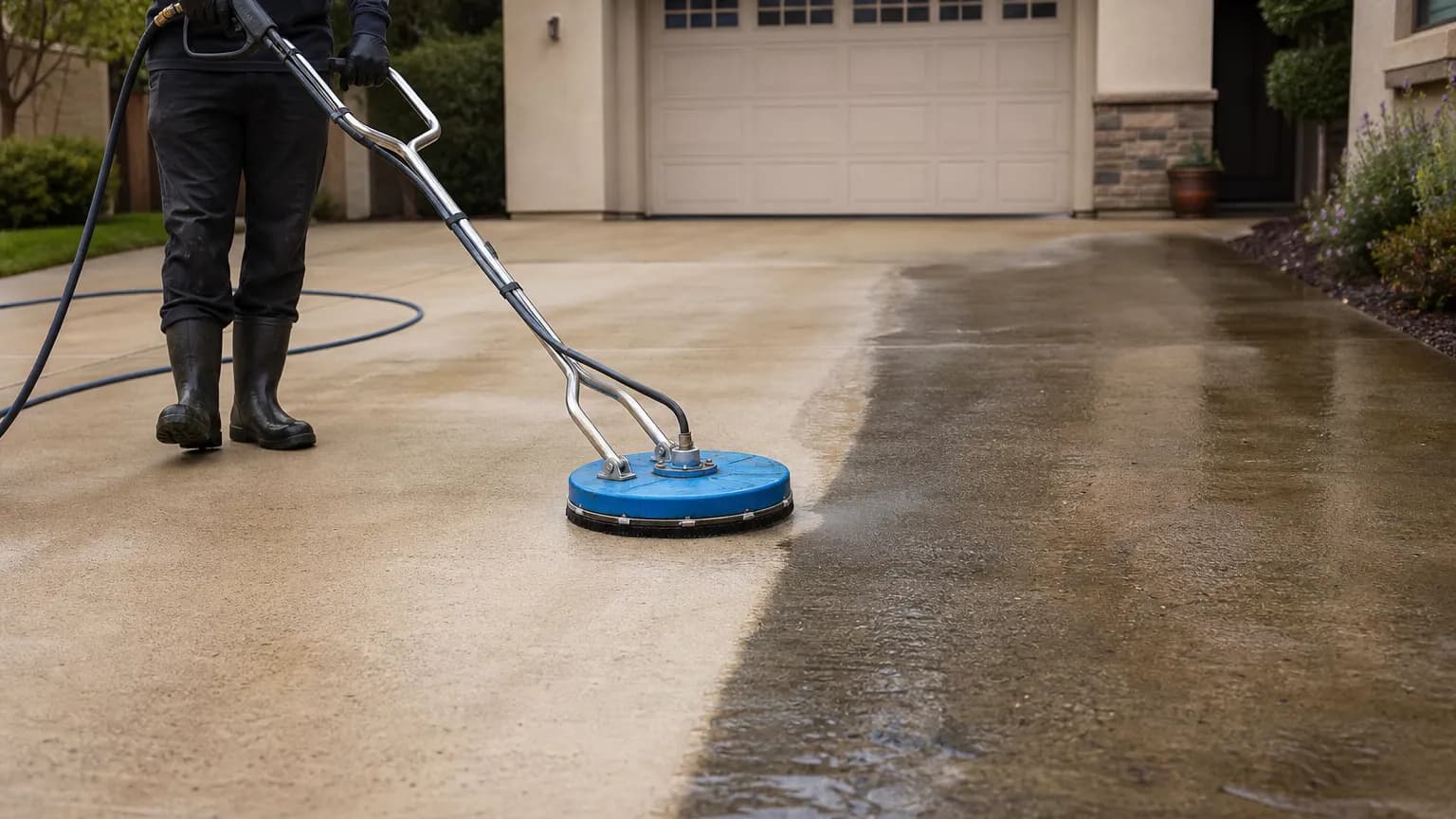
Cleaning a large slab with a wand, one pass at a time, leaves a pattern of light and dark stripes, often called zebra striping. Each pass cleans a little differently depending on distance, angle and speed. The stripes can be hard to even out afterward. Professional crews use a surface cleaner, a round housing with spinning nozzles held at a fixed height, which cleans evenly and much faster.
Other common mistakes
- Blasting the sand out from between pavers, which loosens them and invites weeds.
- Forcing water under siding, into weep screeds, door thresholds or garage seals.
- Skipping the degreaser or cleaning solution and trying to make up for it with more pressure.
- Letting dirty runoff dry on walls, garage doors or the sidewalk next door.
- Using high pressure on surfaces that should be cleaned gently. Our guide to soft washing vs pressure washing explains which surfaces need which.
What a professional cleaning looks like
A good cleaning is more than pressure. We start by looking at the surface and the stains, because concrete, pavers, stamped concrete and natural stone are not treated the same way. Oil and heavy stains get pre-treated and given time to work. The flatwork is cleaned with a surface cleaner for an even finish, edges and corners are detailed with a wand, and everything is rinsed so runoff does not dry where it should not. Organic growth gets a treatment that slows its return.
You can read more about what we clean on our pressure washing page. ALLCLEAN Home Services works on driveways, patios, walkways, walls and other exterior surfaces for homes and businesses across Riverside County and Orange County.
Keeping it clean longer
A few habits stretch the time between cleanings:
- Adjust sprinkler heads so they water plants and not concrete.
- Treat oil drips early, and slide a drip pan under a vehicle that leaks.
- Sweep or blow off leaves before they sit wet and leave tannin stains.
- Rinse dust off after wind events instead of letting it cake.
- Move planters and mats now and then so moisture does not stay trapped under them.
- Fold flatwork into a yearly routine with the rest of the exterior. Our seasonal exterior cleaning checklist for Southern California lays out a simple order for the year.
If your driveway or patio is showing the signs above, book a free estimate online and we will look at the surface, the stains and the right way to clean them.