People use "pressure washing" to mean any outdoor cleaning with a machine and a hose. In practice there are two different methods, and they are not interchangeable. Pressure washing relies on the force of the water. Soft washing relies on a cleaning solution, applied at low pressure, to do the work. The right choice depends on the surface, and picking the wrong one is the most common way exteriors get damaged.
What each method does
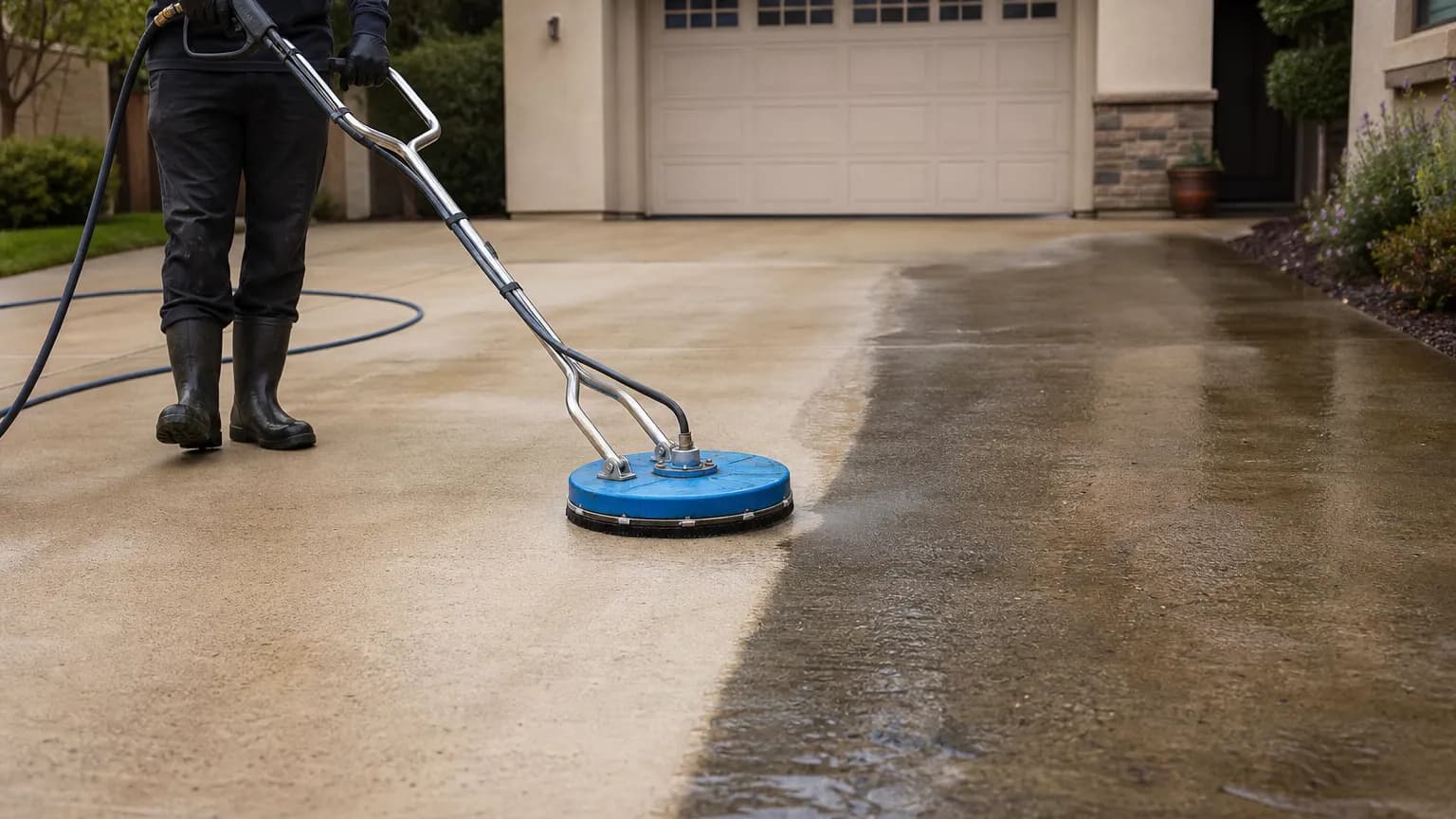
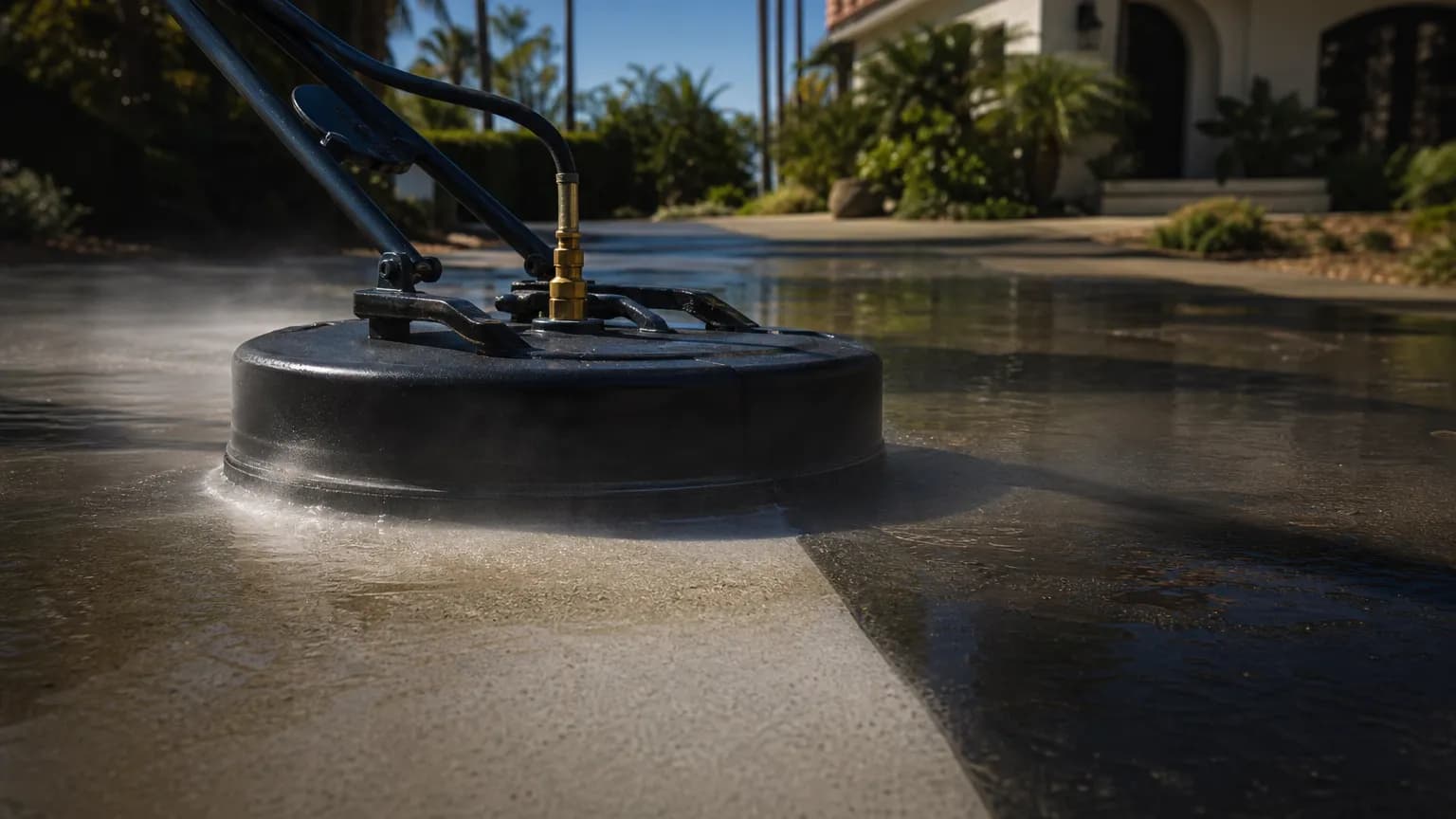
Pressure washing uses a pump to push water through a small nozzle at high force. That force physically lifts dirt, stains and growth from the surface. It works best on hard, dense materials that can take it: concrete, some masonry, and stone. On flatwork, professionals use a surface cleaner, a round housing with spinning nozzles, to clean evenly without stripes.
Soft washing uses pressure closer to a garden hose. A diluted cleaning solution is applied to the surface and left to dwell. The solution breaks down dirt and kills organic growth such as algae, mildew and moss. Then the surface is rinsed gently. Nothing is being blasted, so paint, stucco finishes, roof tiles and sealants are left intact.
In both methods, the things that matter are the same four: pressure, water flow, cleaning solution and time. Good exterior cleaning adjusts all four to the surface. Poor exterior cleaning turns the pressure up and hopes.
Side by side
| Soft washing | Pressure washing | |
|---|---|---|
| How it cleans | Solution breaks down dirt and kills growth, then a gentle rinse | Force of the water lifts dirt from the surface |
| Pressure | Low, similar to a garden hose | Medium to high, matched to the surface |
| Best for | Stucco, painted surfaces, siding, roofs, screens enclosures, fences | Concrete, some pavers and masonry, stone, heavy grime |
| Organic growth | Kills it, so it returns more slowly | Removes the visible layer |
| Main risk when misused | Solution too strong, poor rinsing, plants not protected | Etching, stripes, stripped paint, water forced into walls |
| Typical equipment | Dedicated low pressure pump or downstream injection, wide spray tips | Pressure washer, surface cleaner, turbo and fan tips |
Surface by surface
Stucco
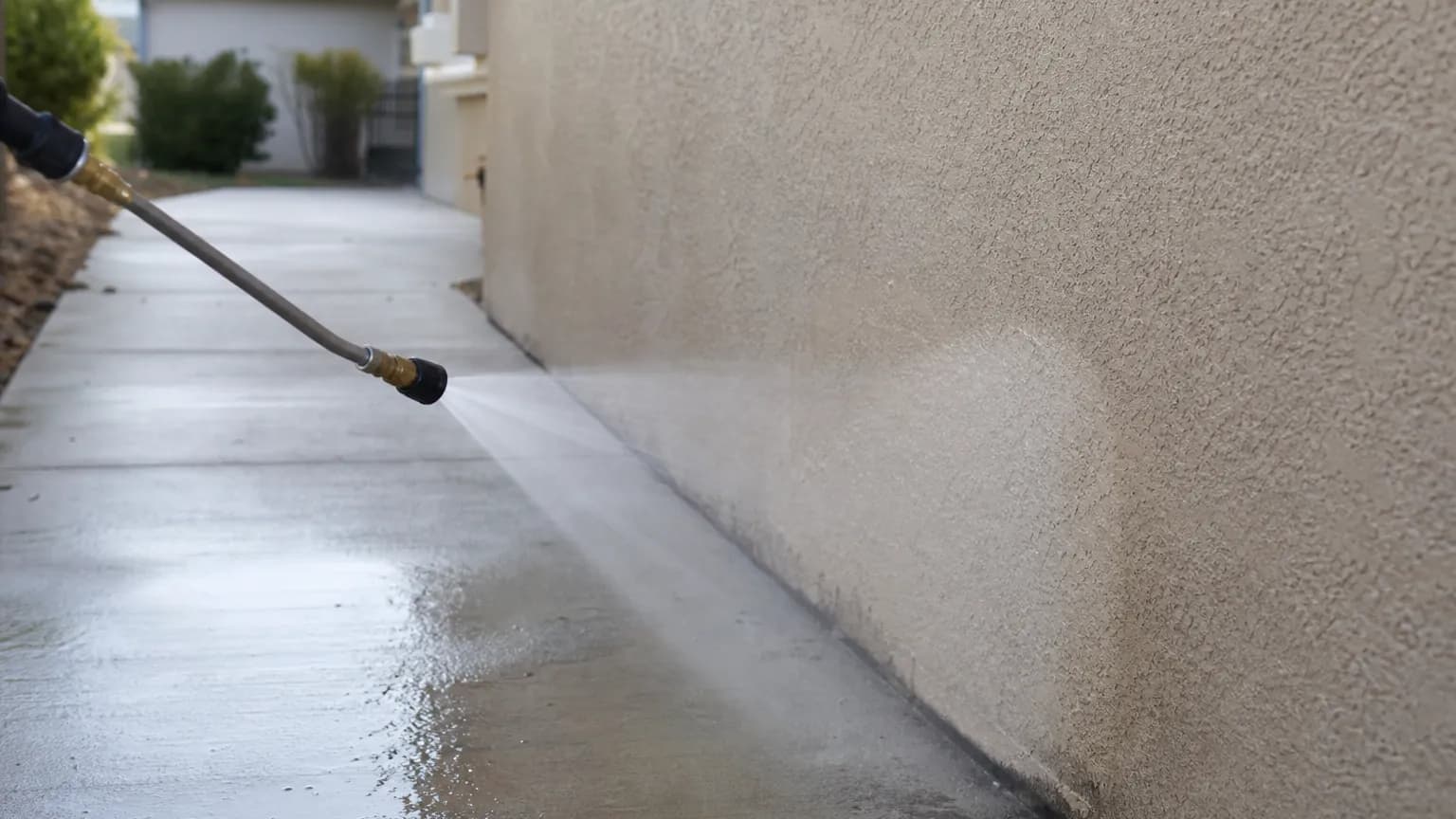
Stucco is everywhere in Riverside County and Orange County, and it is softer and more porous than it looks. It collects dust, rust-colored irrigation stains near the ground, streaks under windows and eaves, and green or black growth on shaded walls. High pressure chips the finish coat, carves visible wand marks, widens hairline cracks and drives water into the wall. Stucco should be soft washed: solution applied from the bottom up, given time to work, and rinsed from the top down at low pressure. Cracks and failed caulking are worth fixing before any washing.
Painted wood
Fascia, eaves, trim, doors, fences and pergolas all fall here. Pressure lifts paint at the edges, raises and furs the wood grain, and forces water into joints where it causes rot. Soft washing cleans the paint film without breaking it. The exception is deliberate: if wood is being prepared for repainting, a controlled wash to remove loose paint can be part of the prep, followed by proper drying time.
Tile roofs
Clay and concrete tile roofs should not be pressure washed. High pressure can strip the surface of the tile, crack or shift tiles, and send water up under the laps onto the underlayment, which is the layer that actually keeps water out. Walking the tiles to do it breaks more. When a tile roof needs cleaning for algae, moss or heavy staining, a low pressure treatment is the appropriate method, and the manufacturer's care guidance should be followed.
Concrete
Driveways, sidewalks, patios and garage floors are what pressure washing is for. Even here, technique matters. Oil and rust benefit from pre-treatment, a surface cleaner prevents stripes, and a narrow tip held close will still etch the surface. Shaded concrete with algae cleans best with a combination: pressure for the dirt, and a post-treatment to kill what is left of the growth. Our guide on how often to pressure wash a driveway covers timing and the signs to look for.
Pavers
Pavers can take moderate pressure, but the joints cannot take abuse. Too much pressure, or a tip aimed into the joints, blows out the sand that locks the pavers together. The result is loose, shifting pavers and a welcome mat for weeds and ants. Pavers are cleaned with reduced pressure and a surface cleaner, and the joint sand is topped up afterward if needed. If the pavers are sealed, that affects which solutions are safe to use.
Brick
Brick varies widely. Hard, modern brick tolerates moderate pressure. Older, softer brick and aged mortar do not, and high pressure erodes mortar joints and the face of the brick. A lower pressure wash with the right cleaner is the safer default. White, powdery deposits on brick are usually efflorescence, which are salts carried out by moisture. Blasting does not solve that. It needs the right cleaner and, ideally, a fix for the moisture source.
Mistakes to avoid
- Using one method for everything. A machine set up for a driveway should not be pointed at stucco, paint or a roof.
- Choosing the narrowest tip. Red and yellow tips concentrate force into a tiny area. They are how concrete gets etched and wood gets gouged.
- Working too close. Distance changes the force on the surface more than most people realize. A few inches is the difference between clean and damaged.
- Spraying upward. Water aimed up under siding laps, roof tiles, eave vents and weep screeds ends up inside the wall or attic.
- Hitting windows, seals and screens with pressure. Pressure can break the seal on dual pane glass, tear screen mesh and strip the finish from frames. Windows are cleaned by hand, not blasted.
- Skipping the solution. Trying to remove algae with pressure alone takes longer, risks damage and lets the growth come back quickly.
- Going too strong with the solution. More is not better. Overly strong mixes can discolor paint, stain metal and harm plants. The mix should suit the surface and the problem.
- Letting solution dry on the surface. Working in direct hot sun without keeping the surface wet leaves streaks and spots.
- Forgetting plants, fixtures and outlets. Landscaping should be pre-wet and rinsed, and light fixtures, outlets and doorbells protected.
- Ignoring runoff. Dirty water should be directed away from pools, fish ponds and the neighbor's driveway.
How to tell which one your home needs
Walk around the house and sort what you see.
- Hard, horizontal and unpainted: driveway, sidewalks, patio, pool deck. This is pressure washing territory.
- Vertical, painted, coated or fragile: stucco walls, trim, eaves, fences, patio covers, roofs. This is soft washing territory.
- Green, black or slimy anything: needs a solution that kills growth, whatever else is done.
- Not sure: treat it gently first. A surface that was cleaned too softly can be cleaned again. A surface that was etched cannot be fixed.
Most homes need both methods on the same visit. A typical exterior cleaning soft washes the walls, eaves and trim, then pressure washes the flatwork last so the runoff from above is cleaned away.
How we approach it
At ALLCLEAN Home Services, we choose the method for each surface instead of running one setting across the whole property. Walls, trim and delicate surfaces get low pressure and the right solution. Concrete and other hard flatwork get pressure with a surface cleaner. Plants are protected and everything is rinsed before we leave.
You can see what a full refresh covers on our exterior cleaning page. If you would like us to look at your home or business and tell you which surfaces need which, book a free estimate online.