If the lower half of a window looks cloudy no matter how often you wipe it, you are probably looking at hard water spots. They are one of the most common glass problems we see in Riverside County and Orange County, and regular glass cleaner does almost nothing to them. The good news is that spots caught early usually come off. The bad news is that spots left alone can become permanent.
Here is what causes them, why time matters, what you can safely try on your own, and what a professional does differently.
What causes hard water spots
Hard water is water that carries a lot of dissolved minerals, mostly calcium and magnesium. Much of Southern California has hard water. When a drop of it lands on glass and dries, the water evaporates and the minerals stay behind as a chalky white ring. One drop leaves almost nothing. Thousands of drops, every morning, leave a crust.
The usual sources are easy to find once you look:
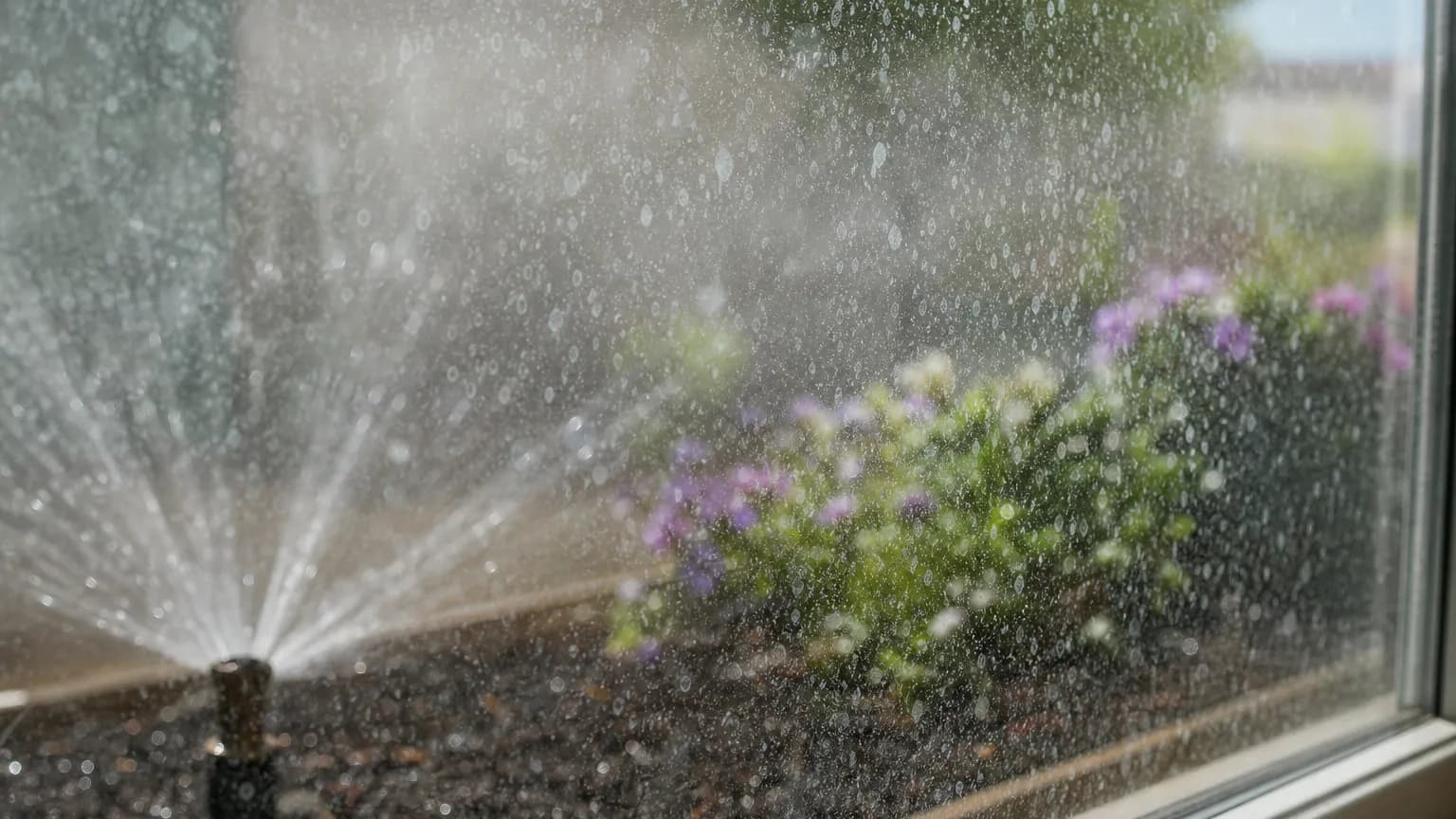
- Sprinklers. This is the big one. A spray head aimed a little too high, a rotor that overshoots the lawn, or drift on a breezy morning wets the same glass day after day. The spotting is usually heaviest on the lower panes and on windows beside planter beds.
- Hose water. Rinsing windows, screens, patios or cars with a hose and letting the water dry in the sun leaves the same minerals behind.
- Runoff from above. Water that drips off stucco, masonry, concrete sills or window screens can carry minerals and other residue onto the glass below and leave streaky deposits.
- Pools and fountains. Splash and mist from water features dry on nearby glass and rails.
Shower doors suffer from the same problem for the same reason. Outside, the sun just makes it happen faster.
Why they get harder to remove
Fresh mineral spots sit on top of the glass. At this stage they are a cleaning problem. Over time, three things change that.
First, the deposits build in layers. Each wetting adds more mineral and the crust gets thicker and harder.
Second, the sun bakes it. Glass on a sunny wall gets very hot, and heat bonds the minerals more tightly to the surface.
Third, the minerals begin to react with the glass itself. Glass looks perfectly smooth, but at a microscopic level it has pores, and a mineral crust that stays damp and alkaline slowly attacks the surface. This is etching. Once glass is etched, removing the deposit reveals a dull, rough patch underneath that is part of the glass. People often describe it as a stain that is "inside" the window.
The practical lesson is that spots are far easier to deal with in the first months than after a few years. If you see them starting, fix the water source and clean the glass soon.
What homeowners can safely try
For light, recent spotting, these steps are safe for plain, uncoated glass:
- Wash the window first. Remove dust and grit with a normal window cleaning so you are not rubbing dirt into the glass.
- Try white vinegar and water. Mix them in roughly equal parts, wet the spotted area, and let it sit for several minutes. Keep it wet. Wipe with a soft microfiber cloth or a non-scratch white pad, then rinse well with clean water and dry the glass.
- Step up to a product made for mineral deposits on glass if vinegar does not do it. Follow the label, test a small corner first, and rinse thoroughly.
- Dry the glass with a squeegee or clean cloth so your rinse water does not leave new spots.
And a few things to avoid:
- Abrasive pads, coarse steel wool, scouring powders and sandpaper. They scratch.
- Razor blades, especially dry or on tempered glass. Fine scratches are easy to cause and impossible to wipe away.
- Strong acids and any product not labeled for glass. They can damage glass, frames, seals, stone sills and the plants below.
- Anything beyond mild soap on tinted film or coated glass. Check with the manufacturer first.
- Letting any cleaner dry on the glass or run down onto painted or anodized frames.
If the spots have not improved after a careful attempt, stop. More scrubbing usually means more risk to the glass, not better results.
What professionals do
A regular window cleaning removes dirt, dust and light residue. Hard water removal is a separate, slower process, and it starts with figuring out what we are dealing with.
Assessment. We look at how heavy the deposits are, whether the glass is tempered, tinted or coated, and whether there are signs of etching. A small test area shows how the glass responds before we commit to the whole window.
Mineral removal. Professional mineral removers are formulated to dissolve calcium and magnesium deposits without harming glass when used correctly. They are applied in a controlled way, worked with non-scratch pads, kept off frames and surrounding surfaces, and neutralized and rinsed completely.
Polishing where needed. For stubborn deposits and light etching, glass can be polished with fine polishing compounds that level the surface without scratching it. This takes time and the right technique, and it is where most of the skill is.
Honest expectations. Severe etching cannot always be reversed. When the glass itself is damaged, polishing may improve it a great deal without making it perfect. A test area tells you what result to expect before the full job.
Final clean. Once the minerals are gone, the window gets a normal professional cleaning, including frames and tracks where needed.
Our window cleaning page describes our interior and exterior service for homes and businesses. If you are unsure whether your glass has deposits or etching, ALLCLEAN Home Services can look at it as part of a free estimate.
Preventing new spots
Removal is only half the job. If the water keeps hitting the glass, the spots come back.
- Adjust the sprinklers. Lower the spray angle, swap heads for ones with a shorter throw, or move to drip irrigation in the beds under windows. Turn the system on and watch it run for a full cycle. You will usually see the problem right away.
- Water early. Early morning tends to be calmer, so less spray drifts onto the house.
- Do not let hose water dry on glass. If you rinse a window, squeegee or dry it.
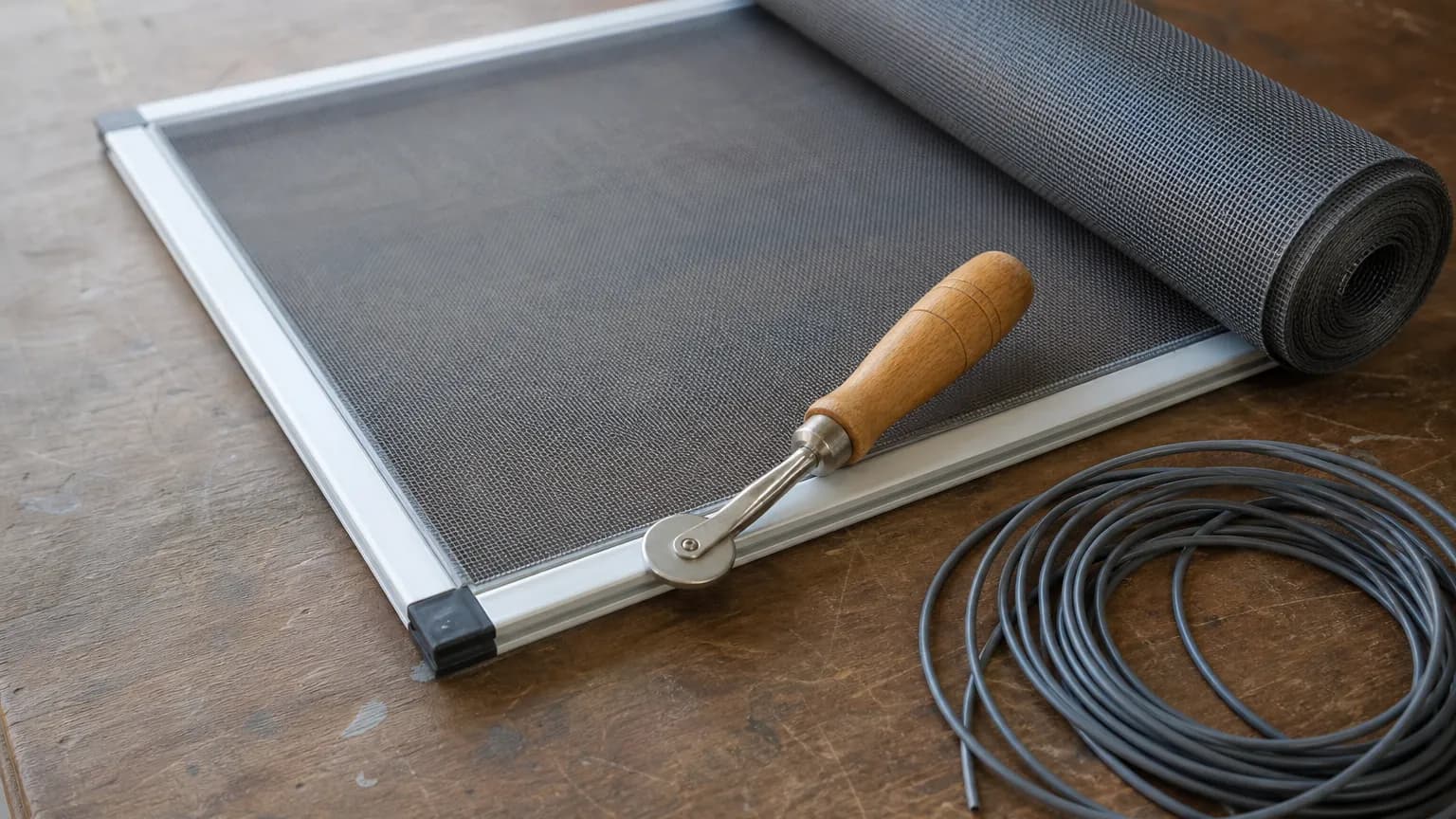
- Keep screens in good shape and clean. Dusty screens shed dirty, mineral-laden water onto the glass when they get wet. If yours are torn or brittle, our guide on whether to repair or replace a window screen will help you decide what to do.
- Clean on a schedule. Regular cleaning removes light deposits before they bond. It also means someone is looking at your glass often enough to catch a new sprinkler problem early.
- Add windows to your yearly routine. Our seasonal exterior cleaning checklist shows where glass fits with the rest of the outside of your home.
When to call
Call when vinegar and a careful cleaning have not worked, when the spots cover many windows, when the glass is tinted, coated or hard to reach, or when you suspect etching. Second-story glass is a safety issue on its own, and hard water work on a ladder is not a good homeowner project.
If your windows have that cloudy lower edge that never wipes off, book a free estimate and we will take a look at the glass and the water source.